Toy Story's timeless reminder -
Play Matters
From the Desk of Erin Lozano, MEd, LPC-S, RPT-S
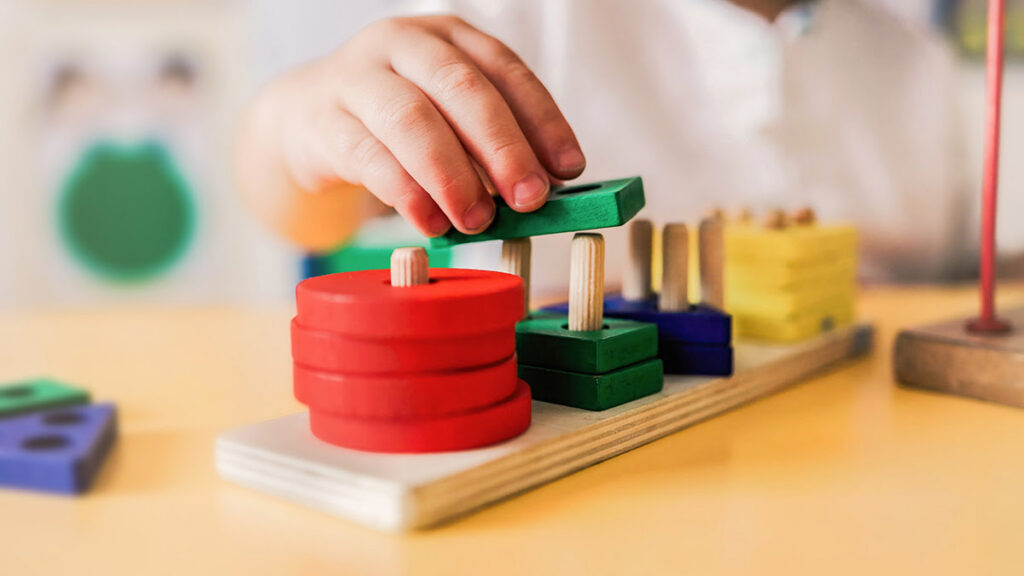
With the release of Toy Story 5, I’ve found myself thinking about one of the messages that has always made these movies so meaningful — it reminds us that while toys may seem simple, play is incredibly powerful.
As parents, we all understand the appeal of electronics. Screens can entertain, occupy, and provide a much-needed break during busy days. Technology certainly has its place in our children’s lives. But as a play therapist, I am continually reminded that there are so many things screens simply can’t replace.
01
PLAY HAS THE POWER TO
Connect
Whether a child is building a fort with a sibling, creating a story with action figures, or playing a board game with family, play creates opportunities for relationships to grow. Through it, children learn how to take turns, cooperate, negotiate, and experience the joy of shared moments.
02
PLAY HAS THE POWER TO
Help Children Grow
Every time a child engages in imaginative play, they are developing problem-solving skills, creativity, flexibility, and confidence. They learn how to handle challenges, think through solutions, and discover what they are capable of doing.
03
PLAY HAS THE POWER TO
Teach
Children naturally learn through hands-on experiences. Whether they are experimenting with blocks, creating art, pretending to run a restaurant, or inventing games in the backyard, they are developing cognitive, social, language, and motor skills without even realizing it.
04
PLAY HAS THE POWER TO
Engage
Unlike passive entertainment, play requires active participation. Children become fully involved in what they are doing, using their minds, bodies, and imaginations. This engagement helps build attention, persistence, and a sense of ownership over their experiences.
05
PLAY HAS THE POWER TO PROVIDE
Practice for life
Children often rehearse real-world situations through play. They practice being a friend, a parent, a teacher, a superhero, or a problem-solver. Through these experiences they develop social skills, emotional regulation, communication, and resilience that will serve them throughout their lives.
06
AND PERHAPS MOST IMPORTANTLY, PLAY HAS THE POWER TO HELP CHILDREN
Express feelings
Many children do not yet have the words to fully explain what they are thinking or experiencing. Through play, they can communicate fears, worries, frustrations, hopes, and joys in ways that feel natural and safe. In the playroom, toys often become a child's language, helping them process experiences and emotions that might otherwise remain hidden.
“Toys are never just toys. They are tools for connection, growth, learning, imagination, and emotional expression.”
While electronics can keep a child occupied, play helps a child develop. It helps them build relationships, strengthen skills, explore their world, and better understand themselves.
So as we watch another Toy Story adventure, perhaps it offers a simple reminder for all of us: toys are never just toys. They are tools for connection, growth, learning, imagination, and emotional expression.
In a world that increasingly pulls children toward screens, protecting time for play may be one of the most valuable gifts we can give them.
A NOTE FOR PARENTS
Looking for ways to make more room for play at home? Our team is always glad to share ideas and talk through what meaningful, unstructured play can look like for your child. Reach out anytime.